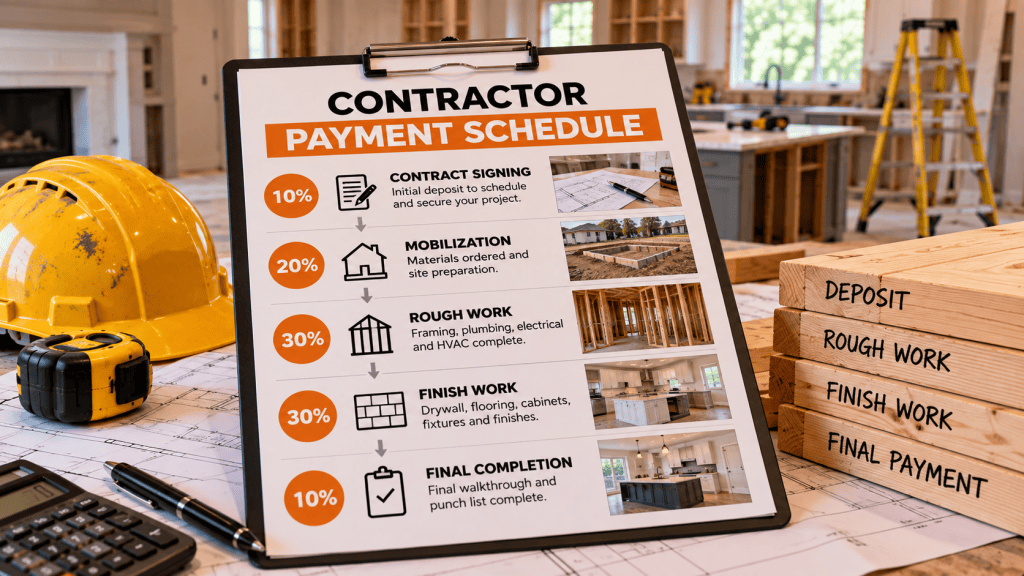
A contractor payment schedule explains when payments are due throughout a remodeling project. Instead of paying the entire project cost at once, payments are typically divided into a deposit and additional payments tied to specific stages of the work or agreed-upon dates.
Understanding the payment schedule before signing a remodeling contract can help homeowners manage cash flow and avoid confusion about when money is due.
HOW ARE CONTRACTOR PAYMENTS TYPICALLY STRUCTURED?
Payment schedules vary depending on the contractor, project size, local requirements, and type of work. A contractor may require an initial deposit followed by progress payments as major stages of the project are completed.
The contract should clearly explain the payment amounts, when each payment becomes due, and what work or milestone triggers the payment.
BE CAREFUL WITH LARGE UPFRONT PAYMENTS
A contractor may legitimately need money upfront for scheduling, materials, or other project costs. However, homeowners should understand exactly what an initial payment covers and how the remaining payments correspond with the work being completed.
Deposit limits and contractor payment rules can also vary by state and locality, so homeowners should check the requirements that apply where the project is located.
WHAT SHOULD HOMEOWNERS REVIEW BEFORE MAKING A PAYMENT?
Before construction begins, make sure the payment schedule is clearly written into the contract and that you understand what triggers each payment.
During the project, compare payment requests with the agreed schedule and the progress of the work. If something doesn’t match what you expected, ask for clarification before making the payment.
PLAN YOUR CONTRACTOR CONVERSATIONS BEFORE THE PROJECT STARTS
The Remodel Planning System helps you organize important project details, budgets, timelines, and contractor conversations before and during your remodel so fewer decisions are left to chance.


Leave a comment