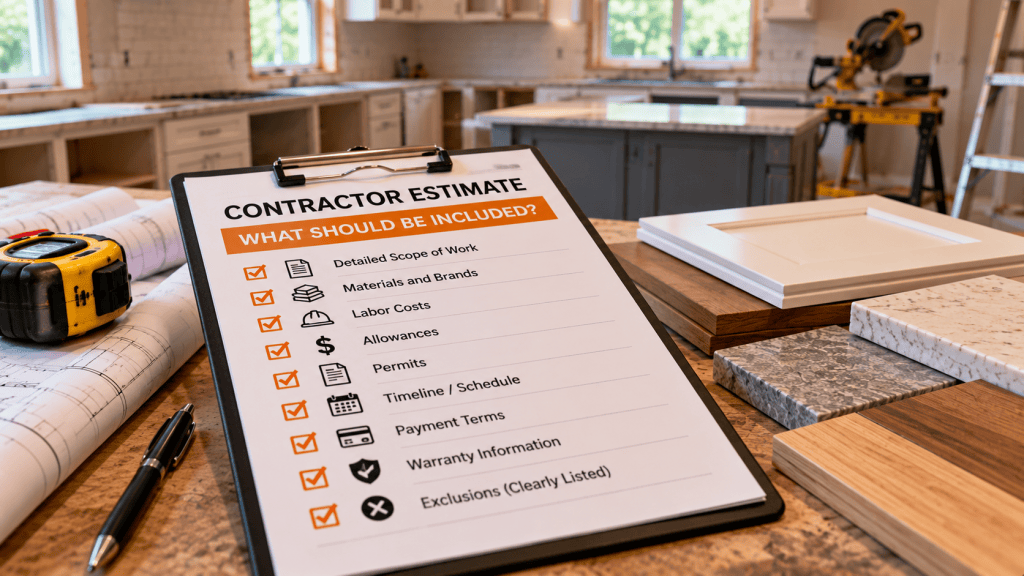
A contractor estimate should give you more than a total project price. It should provide enough detail to understand what work is being priced, what materials or allowances are included, and which costs may still fall outside the estimate.
The clearer the estimate is before you hire a contractor, the easier it is to compare quotes and reduce misunderstandings later.
WHAT INFORMATION SHOULD A CONTRACTOR ESTIMATE INCLUDE?
A remodeling estimate should clearly describe the project scope and the major work the contractor is pricing. Depending on the project, it may also identify materials, allowances, exclusions, payment expectations, and other important assumptions used to calculate the price.
The exact level of detail varies by contractor and project, but you should be able to understand what you’re paying for without relying on assumptions.
WATCH FOR WHAT ISN’T IN THE ESTIMATE
Missing information can be just as important as what’s included. If demolition, permits, cleanup, finish work, materials, or another expected part of the project isn’t addressed, ask whether it is included before signing anything.
Don’t assume a contractor intends to provide something simply because another contractor included it in their estimate.
HOW DO YOU COMPARE CONTRACTOR ESTIMATES FAIRLY?
Before comparing prices, make sure each contractor is pricing a similar scope of work. Differences in materials, allowances, exclusions, and responsibilities can make one estimate look cheaper even when the projects being priced aren’t actually the same.
Clarify major differences before choosing a contractor based on the final number..
NEED HELP COMPARING YOUR ESTIMATES?
The Contractor Quote Comparison Toolkit gives you a structured way to compare contractor estimates, review allowances and potential hidden costs, and identify important differences between quotes.


Leave a comment