Author: Remodel Smarter

  • How Much Contingency Should You Have for a Remodel?

    How Much Contingency Should You Have for a Remodel?

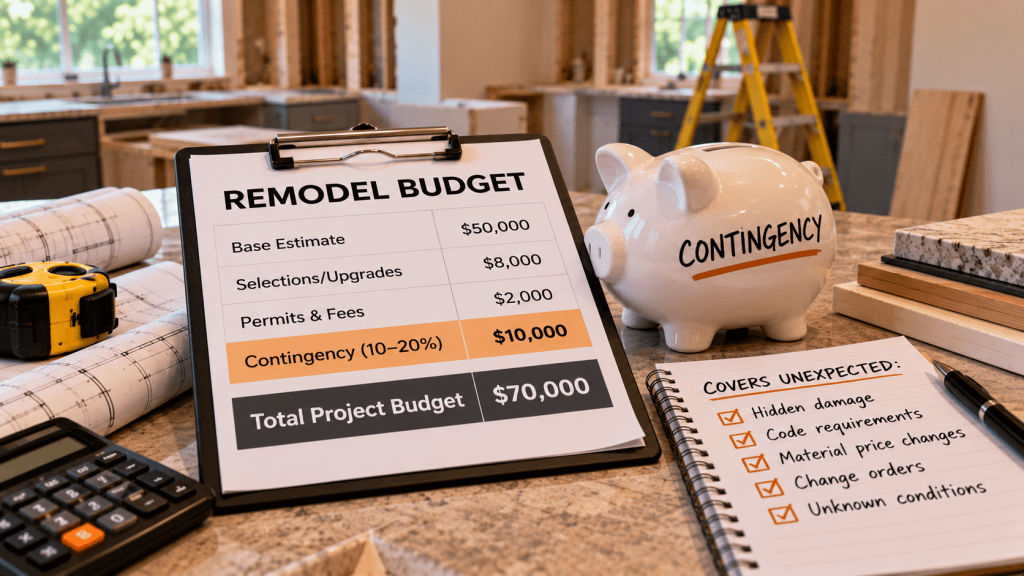
    A remodeling contingency is money set aside for unexpected costs that weren’t included in the original project budget. For many remodeling projects, a contingency of roughly 10% to 20% of the planned construction budget is a reasonable starting point, depending on the project and how much uncertainty is involved.

    Renovating an existing home can uncover conditions that weren’t visible before construction began, so having money reserved for surprises can help keep an unexpected problem from derailing the entire budget.

    HOW MUCH SHOULD YOU SET ASIDE FOR UNEXPECTED REMODELING COSTS?

    A relatively straightforward project with a well-defined scope may justify a contingency closer to the lower end of the range. Older homes, extensive renovations, structural changes, or projects involving significant demolition may warrant a larger reserve.

    Your contingency shouldn’t be treated as extra money available for upgrades. Keep it separate from the amount you’ve planned for the original scope.

    WHAT CAN A REMODELING CONTINGENCY COVER?

    Unexpected conditions can include hidden water damage, deteriorated framing, outdated wiring or plumbing, structural issues, or other problems discovered after walls, floors, or ceilings are opened.

    Not every unexpected cost can be predicted. The purpose of the contingency is to give your budget room to absorb reasonable surprises without immediately forcing you to borrow more money or eliminate other planned work.

    HOW CAN YOU PROTECT YOUR REMODELING BUDGET?

    Build the contingency into your budget before construction begins rather than hoping nothing unexpected happens. As the project progresses, track approved changes and additional costs so you know how much of your reserve remains.

    If the contingency isn’t needed, that’s money you haven’t spent—not an invitation to expand the project.

    BUILD A BETTER REMODELING BUDGET

    The Remodel Planning System helps you organize your remodeling budget, project decisions, timelines, and contractor conversations so you can plan more realistically before construction begins.
  • Remodeling Costs Homeowners Commonly Forget

    Remodeling Costs Homeowners Commonly Forget

    A remodeling budget can look complete and still miss expenses that appear before, during, or after construction. Some costs aren’t obvious in the initial contractor estimate, while others depend on selections, project conditions, or responsibilities that fall to the homeowner.

    Knowing where additional remodeling costs can appear makes it easier to build a more realistic budget before construction begins.

    WHAT REMODELING COSTS ARE EASY TO OVERLOOK?

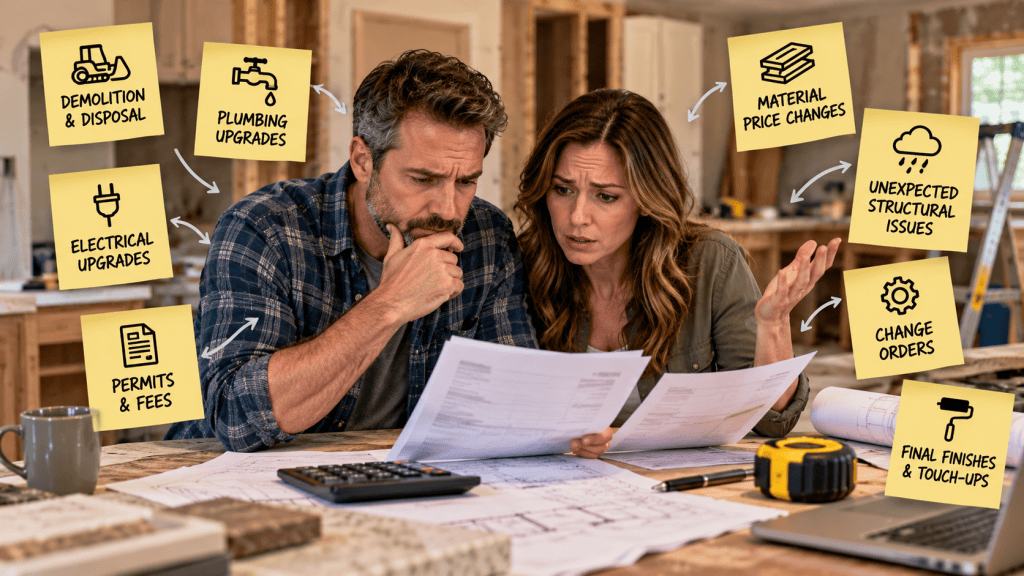
    Depending on the project, commonly overlooked expenses can include permits, design or engineering fees, material upgrades beyond allowances, temporary storage, delivery charges, appliance or fixture installation, painting, cleanup, and repairs to areas affected by construction.

    Some projects also uncover hidden conditions after demolition, such as water damage, outdated electrical or plumbing, or deteriorated framing. These aren’t necessarily costs a contractor could have known about when preparing the original estimate.

    WATCH FOR COSTS OUTSIDE THE CONTRACTOR’S SCOPE

    Review the estimate for exclusions and homeowner responsibilities. If something necessary to complete the project isn’t included in the contractor’s price, it still needs to be accounted for somewhere in your overall remodeling budget.

    This is one reason the lowest contractor estimate doesn’t always result in the lowest final project cost.

    HOW CAN YOU PLAN FOR HIDDEN REMODELING COSTS?

    Review your contractor estimate carefully, identify costs that aren’t included, and keep a contingency in your overall remodeling budget for reasonable surprises.

    The goal isn’t to predict every possible expense. It’s to make sure your budget has enough flexibility that one unexpected cost doesn’t immediately put the entire project in trouble.

    PLAN YOUR REMODELING BUDGET BEFORE CONSTRUCTION STARTS

    The Remodel Planning System helps you organize your remodeling budget, project decisions, timelines, and contractor conversations so you can prepare for more than just the initial estimate.

  • What Should Be Included in a Contractor Estimate?

    What Should Be Included in a Contractor Estimate?

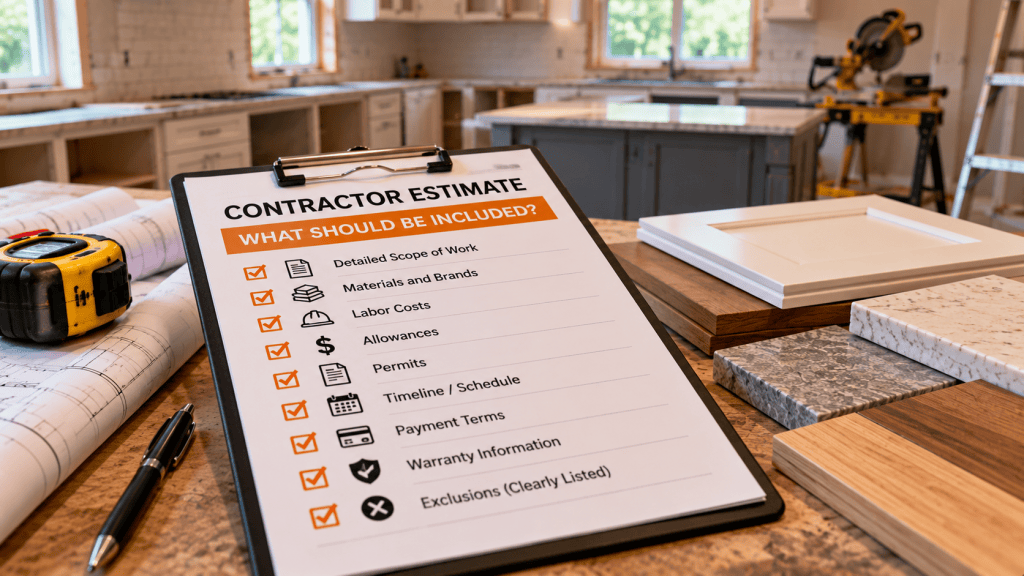
    A contractor estimate should give you more than a total project price. It should provide enough detail to understand what work is being priced, what materials or allowances are included, and which costs may still fall outside the estimate.

    The clearer the estimate is before you hire a contractor, the easier it is to compare quotes and reduce misunderstandings later.

    WHAT INFORMATION SHOULD A CONTRACTOR ESTIMATE INCLUDE?

    A remodeling estimate should clearly describe the project scope and the major work the contractor is pricing. Depending on the project, it may also identify materials, allowances, exclusions, payment expectations, and other important assumptions used to calculate the price.

    The exact level of detail varies by contractor and project, but you should be able to understand what you’re paying for without relying on assumptions.

    WATCH FOR WHAT ISN’T IN THE ESTIMATE

    Missing information can be just as important as what’s included. If demolition, permits, cleanup, finish work, materials, or another expected part of the project isn’t addressed, ask whether it is included before signing anything.

    Don’t assume a contractor intends to provide something simply because another contractor included it in their estimate.

    HOW DO YOU COMPARE CONTRACTOR ESTIMATES FAIRLY?

    Before comparing prices, make sure each contractor is pricing a similar scope of work. Differences in materials, allowances, exclusions, and responsibilities can make one estimate look cheaper even when the projects being priced aren’t actually the same.

    Clarify major differences before choosing a contractor based on the final number..

    NEED HELP COMPARING YOUR ESTIMATES?

    The Contractor Quote Comparison Toolkit gives you a structured way to compare contractor estimates, review allowances and potential hidden costs, and identify important differences between quotes.

  • Why Are Contractor Quotes So Different?

    Why Are Contractor Quotes So Different?

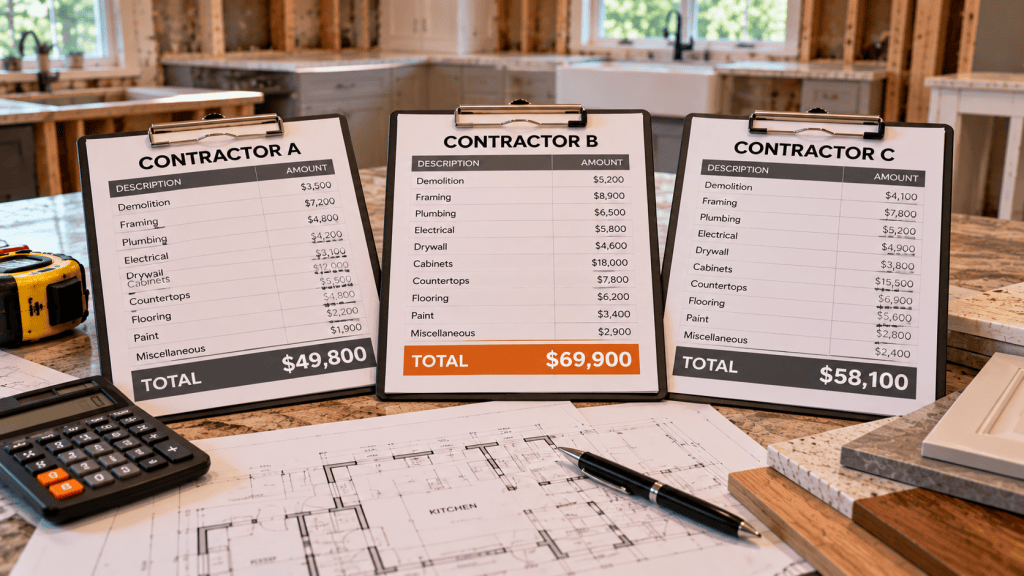
    Contractor quotes for the same remodeling project can sometimes differ by thousands—or even tens of thousands—of dollars. That doesn’t automatically mean the highest contractor is overpriced or the lowest contractor is offering a bargain.

    Remodeling estimates can vary because contractors may be pricing different scopes of work, materials, allowances, labor costs, overhead, and project assumptions.

    WHY CAN REMODELING ESTIMATES VARY SO MUCH?

    Contractors don’t all operate the same way. Crew size, subcontractor costs, insurance, overhead, scheduling, material suppliers, and the amount of work included in the estimate can all affect the final price.

    Two contractors may also interpret the same project differently. One may include work or materials that another contractor assumes will be handled separately..

    A LOWER CONTRACTOR QUOTE MAY INCLUDE LESS

    Price differences become especially important when the estimates contain different allowances, exclusions, materials, or levels of detail.

    Before assuming one contractor is simply more expensive, determine whether the estimates are actually pricing the same project. A lower initial quote can become more expensive later if important work or realistic material costs weren’t included.

    HOW SHOULD HOMEOWNERS HANDLE VERY DIFFERENT QUOTES?

    Don’t focus only on the price difference. Look for differences in scope, materials, allowances, exclusions, and contractor responsibilities, and ask questions about anything that isn’t clear.

    The goal is to understand why the quotes are different before deciding which contractor provides the right combination of scope and price for your project.

    COMPARE THE QUOTES, NOT JUST THE PRICES

    The Contractor Quote Comparison Toolkit gives you a structured way to compare estimates side by side, review allowances and hidden costs, and identify important differences that can be difficult to spot when looking at the totals alone.

  • What Does “Exclusions” Mean on a Contractor Estimate?

    What Does “Exclusions” Mean on a Contractor Estimate?

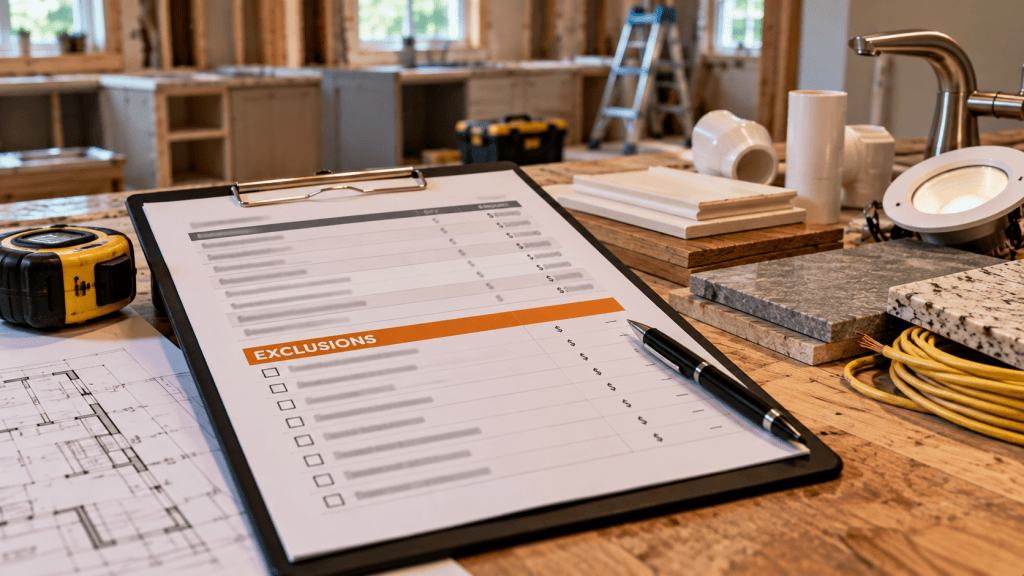
    Exclusions on a contractor estimate are items, materials, services, or responsibilities that are not included in the quoted price. Understanding exclusions is important because an estimate can appear complete while leaving certain project costs for the homeowner to pay separately.

    Before comparing contractor estimates, look at both what each contractor includes and what they specifically exclude.

    WHAT ARE COMMON EXCLUSIONS IN REMODELING ESTIMATES?

    Exclusions vary by project and contractor. Depending on the remodel, an estimate might exclude permits, design or engineering fees, certain materials, appliance installation, painting, cleanup, repairs to hidden damage, or other work outside the stated scope.

    An exclusion isn’t automatically a problem. The important question is whether you understand who is responsible for that work and what it could add to your overall remodeling budget.

    WHY DO EXCLUSIONS MATTER WHEN COMPARING CONTRACTOR QUOTES?

    Two contractors can quote very different prices because they aren’t pricing exactly the same scope. One estimate may include work that another contractor lists as an exclusion.

    That means the lower contractor quote isn’t necessarily the lower final cost. Review exclusions before comparing the bottom-line prices.

    WHAT SHOULD HOMEOWNERS DO WITH ESTIMATE EXCLUSIONS?

    Read the exclusions section carefully and ask about anything you don’t understand. If an excluded item will still be required to complete the remodel, determine who will handle it and how much you should budget for it.

    When comparing estimates, make sure major exclusions are considered before deciding which contractor quote represents the better value.

    MAKE CONTRACTOR QUOTES EASIER TO COMPARE

    The Contractor Quote Comparison Toolkit helps you compare estimates side by side, review allowances and exclusions, identify potential hidden costs, and see important differences before choosing a contractor.

  • What Is an Allowance in a Contractor Estimate?

    What Is an Allowance in a Contractor Estimate?

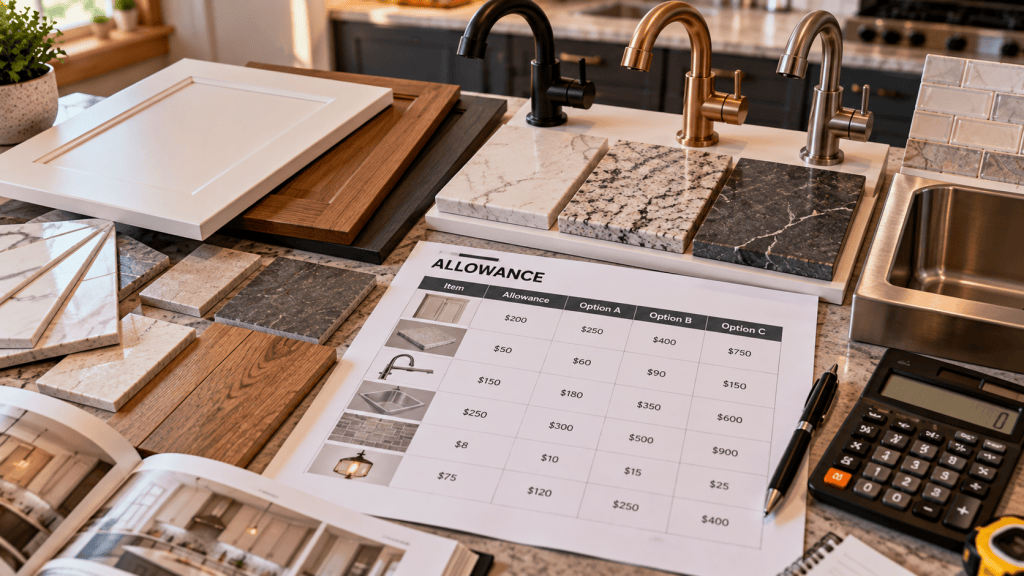
    An allowance in a contractor estimate is a set amount of money included for an item that hasn’t been fully selected or priced yet. Allowances are common for things like tile, flooring, plumbing fixtures, lighting, cabinets, and other finish materials.

    They help a contractor prepare an estimate before every selection is finalized—but they can also affect what your remodel ultimately costs.

    HOW DO ALLOWANCES WORK IN A REMODELING ESTIMATE?

    Suppose a contractor includes a $2,000 allowance for tile. If the tile you eventually select costs $2,800, the difference may increase your project cost. If your selection costs less than the allowance, how that difference is handled should be explained in your contract.

    That’s why homeowners should pay attention to the allowance amount itself, not simply whether an allowance appears in the estimate..

    WHY CAN LOW ALLOWANCES BE MISLEADING?

    An estimate with unusually low allowances can make the overall project price appear more attractive. But if those allowances aren’t realistic for the products you expect to choose, the budget can increase as selections are finalized.

    When comparing contractor quotes, check whether competing estimates use similar allowances before assuming one contractor is actually less expensive.

    WHAT SHOULD HOMEOWNERS ASK ABOUT ALLOWANCES?

    Before signing a remodeling contract, make sure you understand which items are allowances and whether the amounts are realistic for the products you expect to choose.

    If you’re comparing multiple contractor estimates, differences in allowances can make two otherwise similar quotes look farther apart than they really are..

    COMPARING CONTRACTOR ESTIMATES?

    The Contractor Quote Comparison Toolkit helps you compare estimates side by side, review allowances, identify potential hidden costs, and better understand what you’re actually getting for the quoted price.

  • How Do Contractor Payment Schedules Work?

    How Do Contractor Payment Schedules Work?

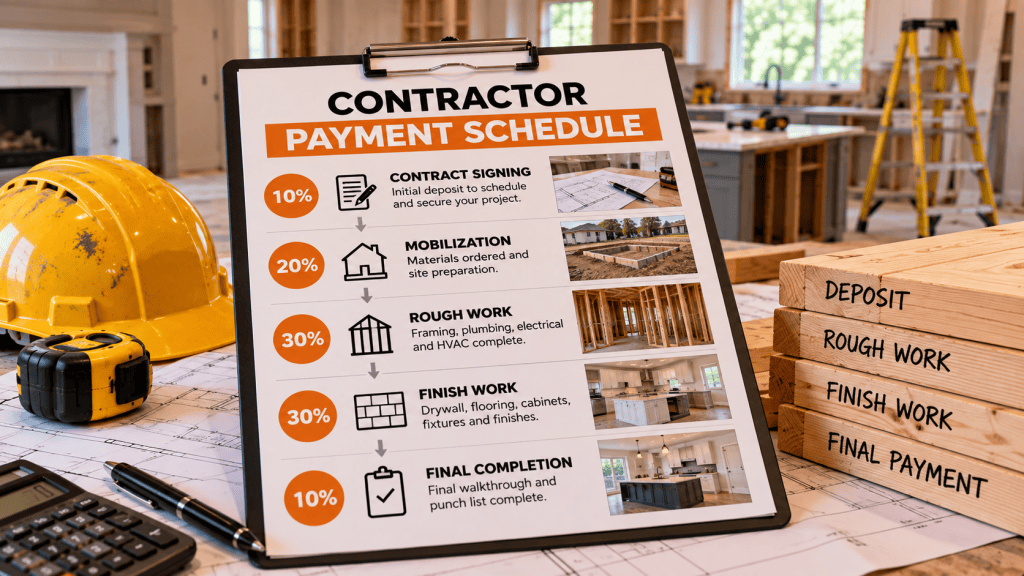
    A contractor payment schedule explains when payments are due throughout a remodeling project. Instead of paying the entire project cost at once, payments are typically divided into a deposit and additional payments tied to specific stages of the work or agreed-upon dates.

    Understanding the payment schedule before signing a remodeling contract can help homeowners manage cash flow and avoid confusion about when money is due.

    HOW ARE CONTRACTOR PAYMENTS TYPICALLY STRUCTURED?

    Payment schedules vary depending on the contractor, project size, local requirements, and type of work. A contractor may require an initial deposit followed by progress payments as major stages of the project are completed.

    The contract should clearly explain the payment amounts, when each payment becomes due, and what work or milestone triggers the payment.

    BE CAREFUL WITH LARGE UPFRONT PAYMENTS

    A contractor may legitimately need money upfront for scheduling, materials, or other project costs. However, homeowners should understand exactly what an initial payment covers and how the remaining payments correspond with the work being completed.

    Deposit limits and contractor payment rules can also vary by state and locality, so homeowners should check the requirements that apply where the project is located.

    WHAT SHOULD HOMEOWNERS REVIEW BEFORE MAKING A PAYMENT?

    Before construction begins, make sure the payment schedule is clearly written into the contract and that you understand what triggers each payment.

    During the project, compare payment requests with the agreed schedule and the progress of the work. If something doesn’t match what you expected, ask for clarification before making the payment.

    PLAN YOUR CONTRACTOR CONVERSATIONS BEFORE THE PROJECT STARTS

    The Remodel Planning System helps you organize important project details, budgets, timelines, and contractor conversations before and during your remodel so fewer decisions are left to chance.

  • Questions to Ask a Contractor Before Hiring

    Questions to Ask a Contractor Before Hiring

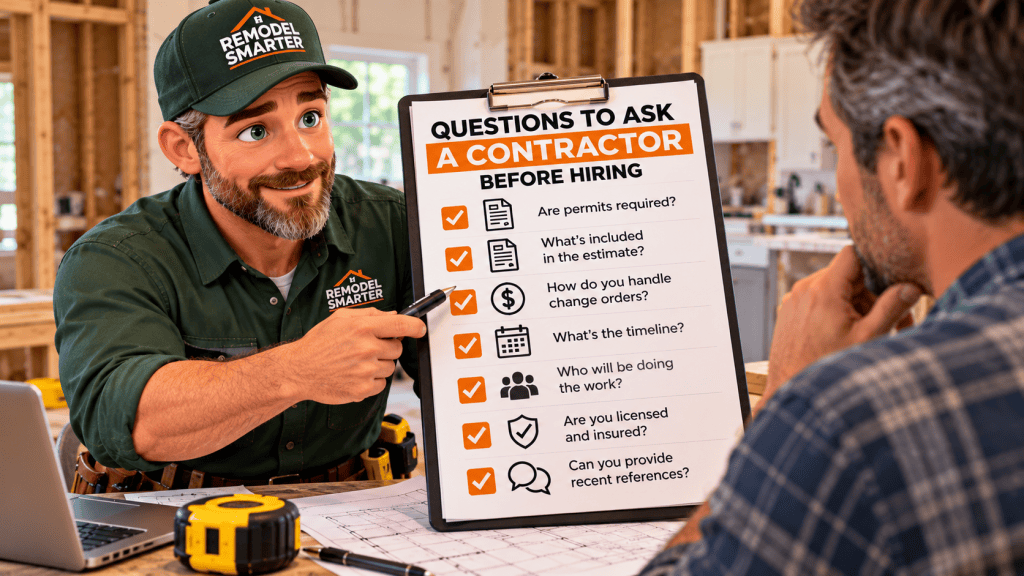
    Hiring a remodeling contractor involves more than comparing prices. Before signing a contract, homeowners should understand how the contractor plans to manage the project, communicate changes, handle payments, and address problems that may arise during construction.

    Asking a few important questions early can help you understand what to expect before work begins.

    WHAT SHOULD YOU ASK A REMODELING CONTRACTOR?

    Start by asking how the contractor will define the scope of work, who will be responsible for managing the project, and how communication will be handled during construction.

    You should also understand how payments, allowances, change orders, scheduling, and unexpected conditions will be handled. The goal isn’t simply to get the “right” answers—it’s to make sure expectations are clear before you enter into an agreement.

    ASK ABOUT WHAT ISN’T INCLUDED

    Ask the contractor to explain any exclusions or homeowner responsibilities in the estimate. If permits, materials, cleanup, painting, design work, or other parts of the project aren’t included, determine who will be responsible for them.

    Understanding these details before signing can help prevent confusion and unexpected costs later.

    PAY ATTENTION TO HOW THE CONTRACTOR COMMUNICATES

    The contractor’s answers matter, but so does the way those answers are communicated. Clear explanations about scope, pricing, scheduling, and responsibilities can help establish expectations before the project begins.

    If an important part of the project is unclear, ask for clarification and make sure significant agreements are documented in writing rather than relying only on verbal conversations.

    PREPARE BEFORE YOU HIRE A CONTRACTOR

    The Remodel Planning System helps homeowners organize project decisions, budgets, timelines, and contractor conversations before construction begins. It also includes the Contractor Hiring Guide as a free bonus, giving you additional guidance for evaluating contractors before making a hiring decision.

  • What Is a Remodeling Change Order?

    What Is a Remodeling Change Order?

    A remodeling change order is a written modification to the original construction contract that changes the project’s scope, price, materials, or schedule. Change orders are common in remodeling, but homeowners should understand why the change is happening and what it will cost before approving it.

    WHY DO REMODELING CHANGE ORDERS HAPPEN?

    Change orders can happen when a homeowner requests additional work, selections change, hidden conditions are discovered during construction, or the original plans need to be modified.

    Not every change order means something went wrong. Remodeling existing homes often reveals conditions that couldn’t reasonably be seen before demolition. The important part is making sure changes are clearly documented before additional work moves forward.

    WHAT SHOULD A CHANGE ORDER INCLUDE?

    A change order should clearly describe what is changing, how the change affects the project price, and whether it changes the schedule. Both the homeowner and contractor should understand and approve the change rather than relying on a verbal agreement.

    HOW CAN HOMEOWNERS AVOID CHANGE ORDER SURPRISES?

    Some change orders are unavoidable, but good planning can reduce preventable ones. Make important selections early, review the project scope carefully, and ask how unexpected conditions and additional work will be handled before construction begins.

    When a change is necessary, get the details and cost in writing before approving the additional work whenever possible.

    PLAN BEFORE CONSTRUCTION BEGINS

    The Remodel Planning System helps homeowners organize project decisions, budgets, timelines, and contractor conversations before and during a remodel—when better planning can help prevent expensive surprises.

  • How to Compare Contractor Quotes Without Choosing the Cheapest

    How to Compare Contractor Quotes Without Choosing the Cheapest

    When comparing contractor quotes, look beyond the total price. Pay attention to whether each estimate describes the same scope of work, materials, allowances, exclusions, and contractor responsibilities.

    A lower quote may simply include less work or use different assumptions. If something appears in one contractor’s estimate but is missing from another, ask for clarification before deciding which quote offers better value.

    WATCH FOR ALLOWANCES AND EXCLUSIONS

    Allowances are estimated amounts for items that haven’t been finalized, such as tile, fixtures, or cabinets. A low allowance can make a contractor estimate appear less expensive even though your actual selections may cost more.

    Exclusions are equally important. Work that isn’t included in the estimate may become an additional homeowner expense later.

    HOW TO MAKE CONTRACTOR QUOTES EASIER TO COMPARE

    Before choosing a contractor, make sure you’re comparing the same project—not just the numbers at the bottom of each estimate. Clarify major differences in scope, allowances, exclusions, and materials before signing a contract.

    The more clearly you understand what’s included, the easier it becomes to identify meaningful differences between contractor quotes.

    HAVE MULTIPLE CONTRACTOR QUOTES TO COMPARE?

    The Contractor Quote Comparison Toolkit gives you a structured way to compare estimates side by side, identify potential hidden costs, review allowances, and evaluate each quote more consistently.

    Includes the Quote Comparison Worksheet, Hidden Cost Checklist, Allowance Cheat Sheet, Estimate Scorecard, plus the Contractor Red Flag Checklist as a free bonus.