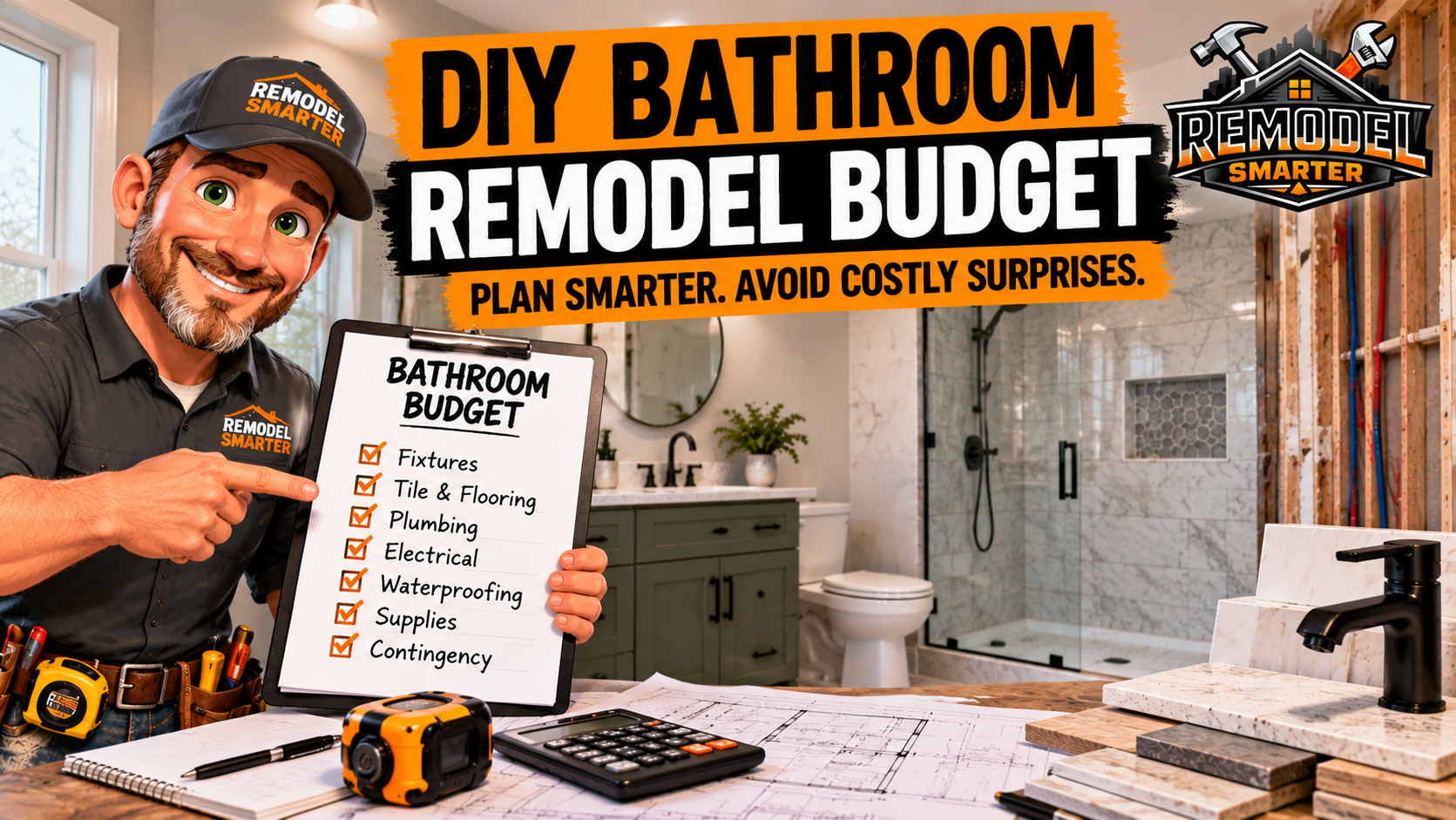
Planning a DIY bathroom remodel budget is one of the most important steps before starting a renovation. While completing some work yourself can reduce labor expenses, materials, hidden repairs, and unexpected costs can quickly add up. A realistic budget helps you understand your expenses and avoid costly surprises.
Learning how to budget for a DIY bathroom remodel before purchasing materials or starting demolition can help you avoid overspending and make more informed decisions throughout the project.
1. Define Your Bathroom Remodeling Scope
Before estimating costs, determine exactly what you plan to change.
A cosmetic bathroom update involving paint, fixtures, and accessories will generally cost less than a complete renovation involving plumbing changes, tile installation, and shower replacement.
Consider whether your project includes:
- Replacing the vanity, sink, or countertop
- Installing new flooring
- Updating the toilet or plumbing fixtures
- Replacing a bathtub or shower
- Installing tile or waterproofing systems
- Upgrading lighting or ventilation
- Repairing damaged walls or subflooring
A clearly defined scope helps prevent unnecessary purchases and unexpected additions during construction.
2. Understand Your DIY Bathroom Remodel Budget
A bathroom remodeling budget should account for more than the visible fixtures and finishes.
| Budget category | Common expenses |
|---|---|
| Fixtures | Toilet, vanity, sink, faucets, bathtub or shower |
| Flooring and tile | Tile, underlayment, mortar, grout, transitions |
| Plumbing | Supply lines, drains, fittings, professional labor |
| Electrical | Lighting, switches, outlets, exhaust fan |
| Walls and finishes | Drywall, paint, trim, accessories |
| Waterproofing | Membranes, shower components, sealants |
| Tools and supplies | Blades, fasteners, buckets, protective equipment |
| Disposal | Debris removal, hauling, disposal fees |
Homeowners sometimes focus on the cost of the vanity, tile, and fixtures while overlooking the smaller materials needed to complete the installation.
Those expenses can add up quickly.
3. Budget for Hidden Bathroom Repairs
Bathrooms are particularly vulnerable to moisture-related damage.
Once demolition begins, you may discover problems that weren’t visible during the initial planning stage.
Common examples include:
- Water-damaged subflooring
- Rot around tubs or showers
- Deteriorated plumbing connections
- Mold or moisture damage requiring appropriate remediation
- Outdated or improperly installed electrical components
Not every bathroom will have these problems, but it’s important to recognize the possibility.
A contingency fund gives you financial flexibility when unexpected repairs become necessary.
For many remodeling projects, homeowners use a preliminary contingency allowance of approximately 10–20%, adjusting it based on the age of the home, project complexity, and uncertainty about existing conditions. This is a planning guideline, not a guarantee that the allowance will cover every surprise.
4. Decide What to DIY and What to Hire Out
One of the biggest opportunities to control remodeling costs is choosing the right combination of DIY work and professional services.
Depending on your skills and local requirements, homeowner-friendly tasks may include painting, installing accessories, or certain finish installations.
More technical work—such as plumbing alterations, electrical modifications, and complex shower waterproofing—may justify professional assistance.
When evaluating DIY savings, consider the cost of tools, your available time, the likelihood of mistakes, and whether incorrect installation could lead to expensive damage.
The cheapest installation isn’t always the lowest-cost outcome.
5. Avoid Purchasing Materials Too Early
Buying materials before finalizing your project plan can create unnecessary expenses.
A vanity may not fit the available space. A flooring selection may require additional subfloor preparation. A shower system may need specific compatible components.
Before purchasing, verify:
- Finished dimensions and clearances
- Product installation requirements
- Material compatibility
- Delivery schedules and return policies
- Whether permits or inspections are required
Careful preparation can reduce wasted purchases and project delays.
6. Track Your Budget Throughout the Remodel
A bathroom budget shouldn’t be something you create once and forget.
As materials are purchased and work progresses, compare your actual spending against your original estimates.
Pay particular attention to changes in project scope, upgraded material selections, additional supplies, and unexpected repairs.
Keeping these expenses organized makes it easier to understand how much money remains available for the rest of the project.
Plan Your Bathroom Remodel With Confidence
A successful DIY bathroom remodel starts with realistic expectations, a clear project scope, and an organized budget.
By identifying major expenses, allowing for unexpected repairs, and deciding which tasks require professional help, you can reduce financial surprises before construction begins.
Need Help Organizing Your Bathroom Remodeling Budget?
Our DIY Bathroom Remodel Planner includes an editable Excel budget workbook, tile estimating calculators, project planning worksheets, and printable checklists to help you organize costs and prepare for your renovation.
You can also explore our other guides and calculators on the Remodeling Tools for Homeowners page.
Remodel Smarter provides educational planning guidance. Always verify local building codes, permit requirements, manufacturer instructions, and applicable professional licensing requirements before beginning work.
Leave a Reply